
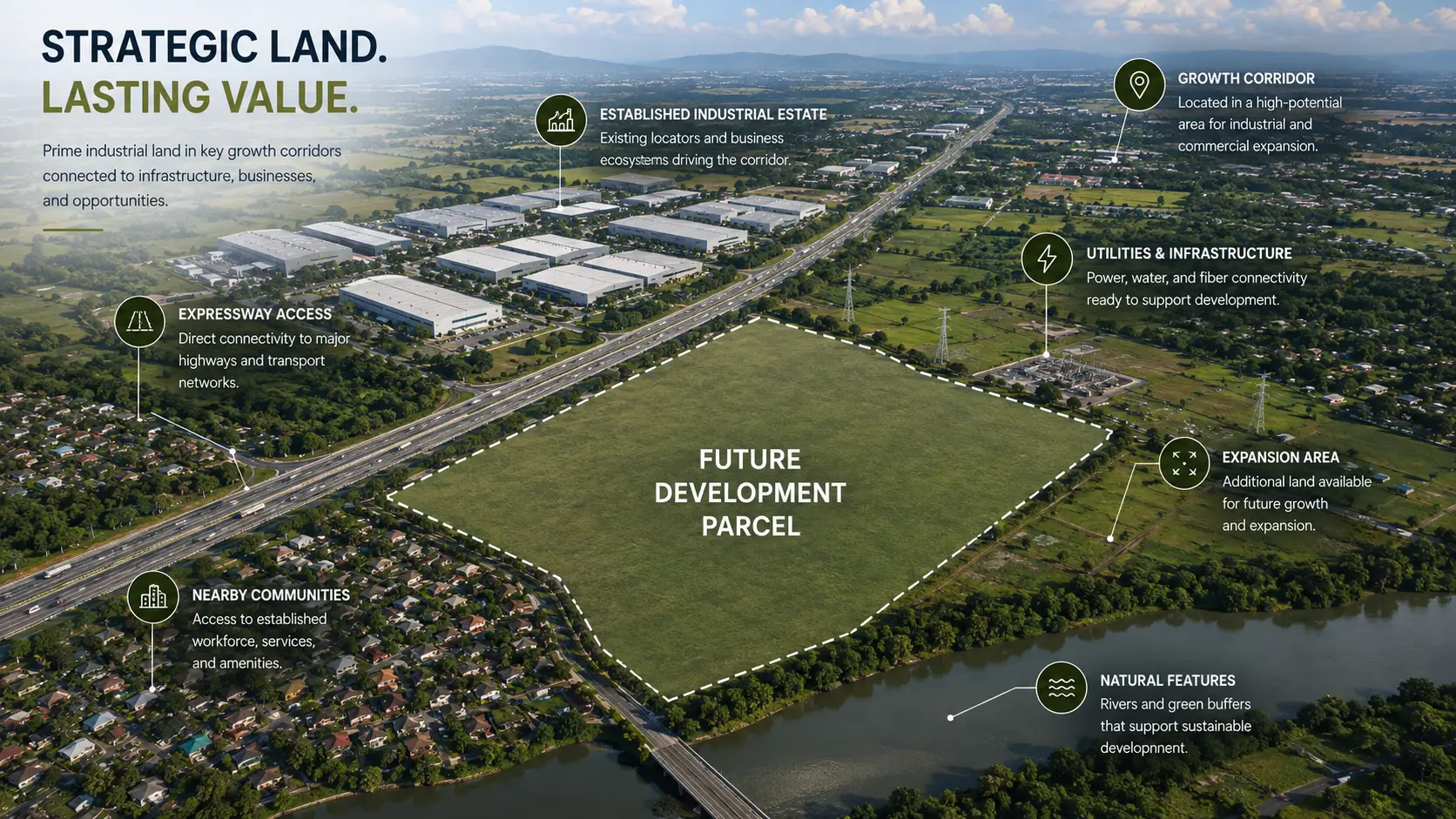
- The Luzon Economic Corridor is strengthening connectivity between key economic centers.
- Infrastructure investments are creating new opportunities for commercial and industrial development.
- Businesses and investors are looking beyond Metro Manila toward emerging regional markets.
- Strategic locations along the corridor are expected to benefit from long-term economic growth.
The Philippines continues to invest in infrastructure that supports long-term economic growth, and one of the most closely watched initiatives is the Luzon Economic Corridor. By improving connectivity between major business centers, ports, airports, and industrial zones, the corridor is expected to influence where businesses invest, expand, and develop over the coming years.
Beyond transportation, the initiative has important implications for commercial real estate, manufacturing, logistics, and regional development. As infrastructure improves, businesses are increasingly evaluating locations outside Metro Manila while remaining connected to the country’s largest consumer and business markets.
Connecting Luzon’s Major Growth Centers
The Luzon Economic Corridor links several of the country’s most important economic regions, including Metro Manila, Central Luzon, and CALABARZON. These areas already play significant roles in manufacturing, logistics, technology, and commercial activity, making improved connectivity an important advantage for future investment.
As travel times improve and infrastructure projects continue to move forward, businesses gain greater flexibility when selecting locations for offices, warehouses, industrial facilities, and commercial developments.
New Opportunities for Commercial Real Estate
Infrastructure often shapes property demand. Improved accessibility can increase the attractiveness of commercial districts, industrial parks, and mixed-use developments while encouraging businesses to establish operations closer to expanding economic corridors.
Areas throughout Bulacan, Pampanga, Tarlac, Laguna, Batangas, and Cavite continue attracting attention as businesses look for locations that balance accessibility, operational efficiency, and long-term growth potential.
Rather than competing directly with Metro Manila, many of these regions complement the capital by supporting manufacturing, logistics, warehousing, and business expansion.
Looking Ahead
The full impact of the Luzon Economic Corridor will continue to develop over time, but its influence on investment decisions is already becoming more apparent. Businesses are increasingly considering infrastructure, connectivity, and regional growth when evaluating future expansion opportunities.
For investors, developers, and property owners, understanding how infrastructure shapes commercial real estate demand can provide valuable insights into where the next wave of opportunities may emerge across Luzon.
It is a strategic infrastructure initiative designed to improve connectivity between key economic regions in Luzon and support long-term economic growth.
Improved infrastructure often increases demand for offices, industrial facilities, warehouses, and commercial developments located near major transport corridors.
Metro Manila, Central Luzon, and CALABARZON, along with provinces such as Bulacan, Pampanga, Tarlac, Laguna, Batangas, and Cavite, are expected to play important roles as the corridor develops.
Whether you’re expanding your business, investing in commercial property, or exploring development opportunities, Hayan Realty provides the market expertise and strategic guidance to help every opportunity reach its full potential.